Hibiscus mutabilis – Confederate Rose
Hibiscus mutabilis, the Confederate rose, is one of the most striking members of the mallow family (Malvaceae). It captivates with large, often double flowers that change color within a single day from white or pink to deep red – this remarkable transformation gave the plant its name "mutabilis" (changeable) and the English names "cotton rose" and "Confederate rose."
Synonyms and Nomenclature
The species was described by Linnaeus (1753). The Kew POWO database lists about 9 synonyms for it; the most important include:
- Abelmoschus mutabilis (L.) Wall. ex Hassk.
- Ketmia mutabilis (L.) Moench
- Hibiscus sinensis Mill.
- Hibiscus mutabilis f. plenus S.Y.Hu
- Hibiscus mutabilis var. roseoplenus Makino
In English, the plant is known as "Confederate rose," "cotton rose," and "cotton rosemallow," and in Chinese as 木芙蓉 (mùfúróng) – it is the floral symbol of the city of Chengdu; the Polish name is ketmia zmienna. Despite the name "rose," it is not related to roses – it is a true mallow.
Origin and Appearance
The species originates from southern and southeastern China and Taiwan and has been widely spread in warm regions of the world. It is a large, fast-growing, deciduous shrub or small tree, reaching 3.7–4.6 m in mild climates, but more often shrubby, 1.5–1.8 m tall.
The leaves are large, broadly lobed, maple-shaped, and densely hairy. The flowers are showy (10–15 cm), single or double, and bloom from summer to autumn. Their hallmark is the color change: they open white or pink in the morning, turn pink by noon, and by evening of the same day shift to red. This transformation is due to increasing anthocyanin content, and its speed is regulated by temperature – cold delays the reddening.
Frost Resistance and Cultivation
Hibiscus mutabilis is a heat-loving plant (USDA zones 7–9; tree form best in 9–10). In zone 7 it is root-hardy – the above-ground shoots die back in winter, and the plant quickly regrows in spring from the roots (it’s worth covering the base). It requires full sun (the more sun, the more flowers) and fertile, moist, well-drained soil. It grows very fast.
Growing from seeds
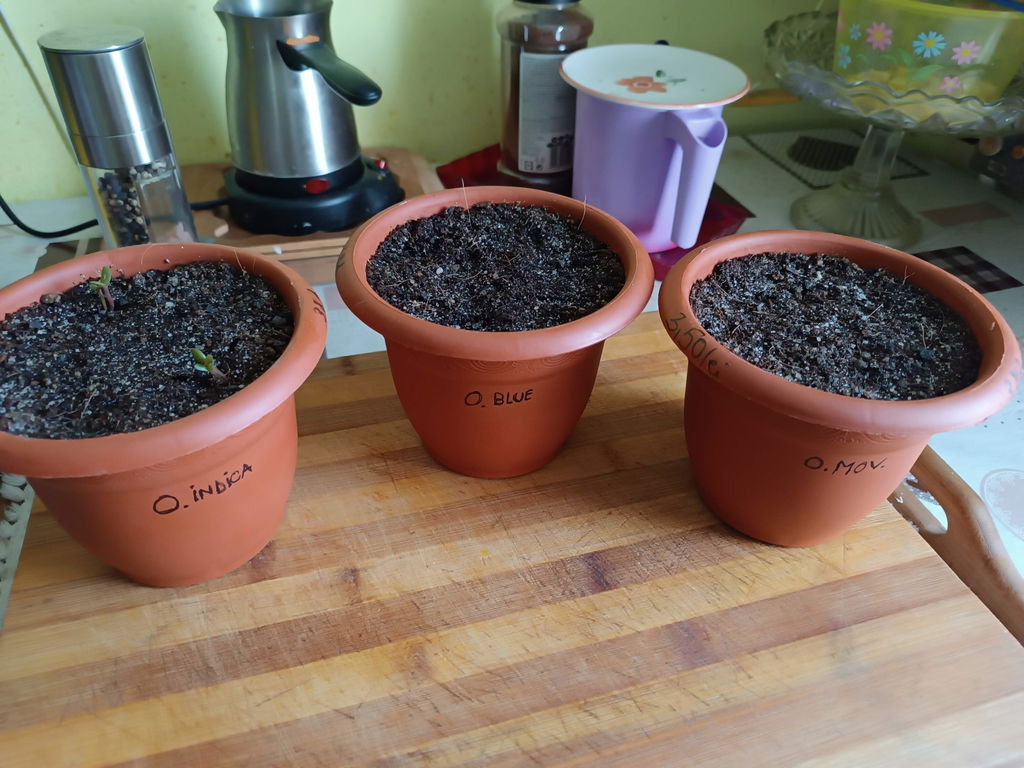
The seeds have a hard, impermeable coat typical of mallows, so before sowing it’s worth soaking them for 12–24 hours in warm water or lightly scarifying them (cutting or rubbing). Sow them about 0.5 cm deep in warm (21–24°C), moist soil. Germination is then quick and reliable, usually within 1–4 weeks. This is an easy cultivation. Note: fully double ornamental forms are usually propagated vegetatively because seeds may not reproduce the variety’s traits.
Uses
This is a valued ornamental plant grown worldwide for its large, color-changing flowers. In traditional medicine (especially Chinese), leaves and flowers were used for burns, swelling, and skin inflammations; the flowers are rich in anthocyanins and phenolic compounds with antioxidant effects. The bast fibers from the stems can be used as twine.
Trivia
This flower changes color during a single day – white or pink at dawn, pink at noon, red at dusk – and the change depends on temperature (cooled flowers stay white longer). The name “Confederate rose” has nothing to do with roses; it comes from the plant’s popularity in the American South in the 1860s, and in China hibiscus is the floral symbol of Chengdu, the “City of Hibiscus.”
Summary
Hibiscus mutabilis is a charming, fast-growing plant with spectacular, color-changing flowers. Growing from seeds is easy after soaking the hard coat, and in cooler climates the plant can be grown as root-hardy or in a pot – in return, it offers an extraordinary, “transforming” flowering display.