Eucalyptus from seeds – sowing, germination, and cultivation
12 min reading
12 min reading
Few plants give as much satisfaction as eucalyptus grown from your own sowing. From a seed almost as fine as dust, a magnificent, fragrant tree with silvery-blue leaves grows within one season — and that is why growing eucalyptus from seeds is gaining more and more followers in Europe. The most popular species for self-sowing is blue eucalyptus (Eucalyptus gunnii): striking, fast-growing, and the most forgiving of the entire genus. In this guide, I will show you what this plant really is, how to effectively germinate and sow its seeds using the cotton pad method, what to expect from its growth, and what conditions — including differences between European regions — to provide to ensure your eucalyptus truly thrives.
Blue eucalyptus (Eucalyptus gunnii) originates from Tasmania, where it naturally grows up to about 30 meters. In cultivation, it remains much shorter, and its greatest asset is its leaves: young ones have a distinctive silvery-blue color and round shape, which later elongate and turn green. The entire plant is evergreen and emits an intense, refreshing scent of essential oils — the same one associated with aromatherapy. It is also one of the fastest-growing species you can sow at home.
Why is it so popular? Silvery branches are a florists' favorite material — they look beautiful in bouquets, both fresh and dried — and the scent of the oils repels mosquitoes and flies. Ready-made seedlings are sometimes available in garden stores, but sowing from seeds offers more: access to species and forms you can't buy as a ready plant, savings (one packet yields many plants), and the simple joy of growing a plant from the very beginning. We've gathered a full range of species for you in one place 👉 [LINK: eucalyptus seed collection].
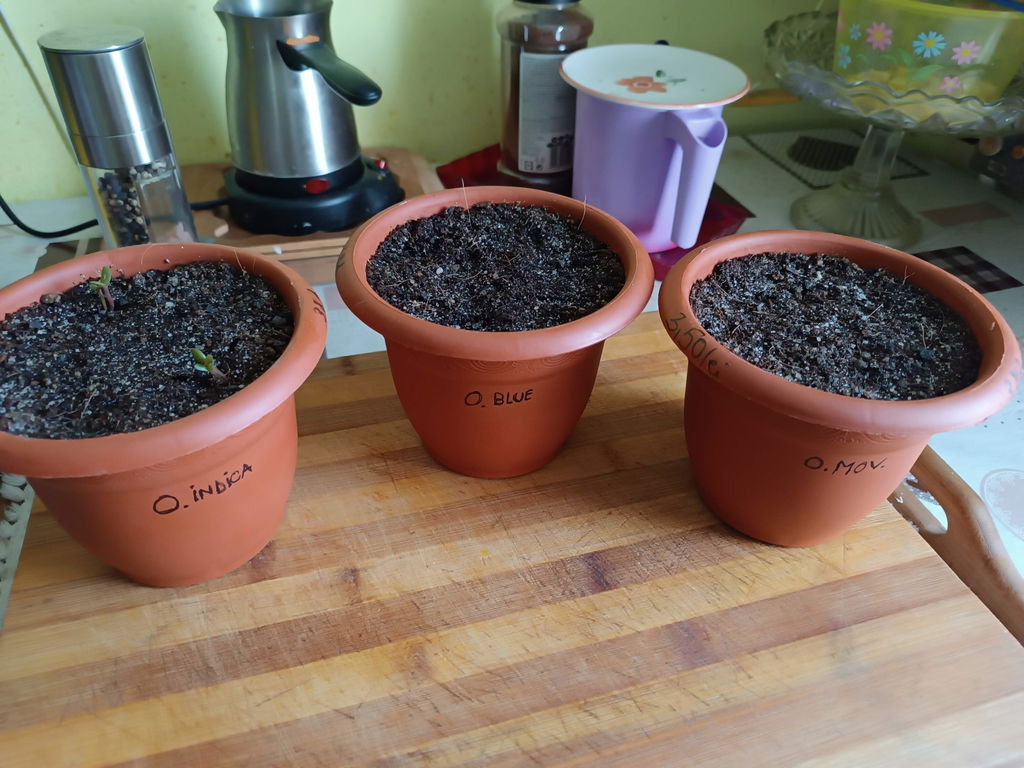
Eucalyptus seeds are exceptionally tiny, so sowing them directly into the soil can be unreliable — they can easily be buried too deep or washed away during watering. A more reliable method is the cotton pad method (or on a damp paper towel), which allows control over moisture and lets you transfer only the seeds that have actually germinated to the substrate.
Details on preparing the substrate and further seedling care can be found in our 👉 [LINK: sowing guide].
The first sprouts usually appear after 1–4 weeks, and sometimes only after six — so don’t be discouraged if nothing happens for several days, because patience is key with exotic plants. Young seedlings are tiny and delicate, so initially maintain high humidity (cover or mini greenhouse) and bright but not harsh light. When the plants develop their first true leaves, gradually acclimate them to room conditions.
The older the plant, the faster the growth. In the first season, eucalyptus primarily establishes roots, but from the second year onward, it can grow by several dozen centimeters per year — and some species, like Eucalyptus globulus, even up to about 2.5 m per season. It is this growth rate that allows a tiny seed to become a magnificent tree or a dense, fragrant shrub in just a few years.
Eucalyptus is a plant of sun and air. Provide it with a bright, well-sunny, and sheltered from wind spot — fast-growing, shallow-rooted trees are easily blown over. The substrate should be fertile but above all well-draining: eucalyptus does not tolerate “wet feet,” and waterlogging is its most common killer. Water moderately, allowing the top layer to dry slightly, and during the growing season (from spring to summer) feed with a balanced fertilizer every few weeks.
Ground or pot? It depends on the climate and species. A well-rooted blue eucalyptus tolerates temperature drops down to about -16°C, so in milder regions it can grow permanently in the soil; more sensitive species are suitable only in containers, overwintered in a cool, bright interior. The pot has the advantage that the plant can be easily moved under cover during frosts — and you can read below where in Europe each option works best.
Europe stretches from Mediterranean warmth to Scandinavian chill, so whether you plant eucalyptus in the ground or keep it in a pot largely depends on your region. Here are practical tips for the four main zones.
Mild, rarely frosty winters mean that almost any species can survive in the ground here — from the common Eucalyptus globulus to collector’s specimens. The biggest challenge is not frost but summer drought: water young plants regularly until they root. This is the zone where you can plant most boldly.
In a mild, humid oceanic climate, the blue eucalyptus is a garden classic and usually overwinters in the ground. However, note: here moisture is more harmful than frost, so drainage is more important than covering, and young trees should be staked to prevent them from being blown over by the wind.
With continental frosts, only the hardiest species will survive in the ground, and only in sheltered locations with agro-fleece covering during the coldest periods. Young seedlings are best kept in pots under a roof for the first winters, and only well-established specimens should be planted in the ground — in spring or early summer.
Here, long, harsh winters practically exclude ground cultivation — eucalyptus is grown as a potted plant: outdoors in summer, and in a bright, cool, frost-free room for winter. A pot offers the greatest chance of success in this zone.
Which specific species to choose? The most popular eucalyptus from seeds are listed in the table below — remember that the frost resistance thresholds apply to well-rooted, mature plants, as young seedlings are always more sensitive.
| Species | Frost resistance | Ground or pot | Best for |
| Snow gum (Eucalyptus pauciflora subsp. niphophila) | down to about -20°C | ground (with good drainage) | coldest gardens, Central Europe |
| Blue eucalyptus (E. gunnii) | down to about -16°C | ground in mild climate, pot further inland | universal choice — West and Central |
| Blue gum eucalyptus (E. globulus) | down to about -6°C | ground in the South, pot elsewhere | for quick effect, warm regions |
| “Baby Blue" (E. pulverulenta) | down to about -7°C | ground in the South, pot elsewhere | floristry — silver leaves for bouquets |
| Rainbow eucalyptus (E. deglupta) | frost-free only | pot only / indoors | for collectors and indoor cultivation |
If you don’t know where to start, go for a proven duo: the universal blue eucalyptus or the hardier snow gum — both can be found among our 👉 [LINK: eucalyptus gunnii / snow gum seeds].
How long do eucalyptus seeds take to germinate?
Usually 1–4 weeks, sometimes up to 6 weeks. The rate depends on the species, seed freshness, and temperature — a constant 22–25°C clearly helps.
Will blue eucalyptus survive winter in the ground?
Well-rooted plants tolerate frosts down to about -16°C, so in mild and temperate climates they can overwinter in the ground — preferably in a sheltered spot with cover during the coldest periods. In colder regions, pot cultivation is safer.
How fast does eucalyptus grow?
Once rooted, it grows very quickly — growth of several dozen centimeters per year is normal, and Eucalyptus globulus can add about 2.5 m in a season. Growth is slower in a pot.
Can eucalyptus be grown in a pot?
Yes, and in cooler parts of Europe this is often the best solution. In a container, the plant grows slower and stays compact, and in winter it’s easy to move it to a bright, cool interior.
Will a plant grown from seed be identical to the parent?
Not necessarily — seedlings show natural variability, which can be an advantage for collectors. If you want consistent form, choose a cutting; if you want diversity and access to rare species — seeds.
Are eucalyptus leaves suitable for bouquets?
Absolutely — the silvery branches of blue eucalyptus are a valued floristry material, beautiful fresh and dried, and intensely fragrant.
Eucalyptus from seeds is a project that rewards patience: a few weeks to germination, one season to a neat little plant, and shortly after, a magnificent, fragrant tree. The key is a few simple rules — chilling the seeds, sowing on the surface, constant moisture and warmth, and later a sunny, sheltered spot with well-draining soil. Blue eucalyptus is the most forgiving and will thrive in most European gardens, and in cooler regions it does well in a pot. If you want to try, choose a species suited to your climate and grab seeds from our 👉 [LINK: eucalyptus seed collection].